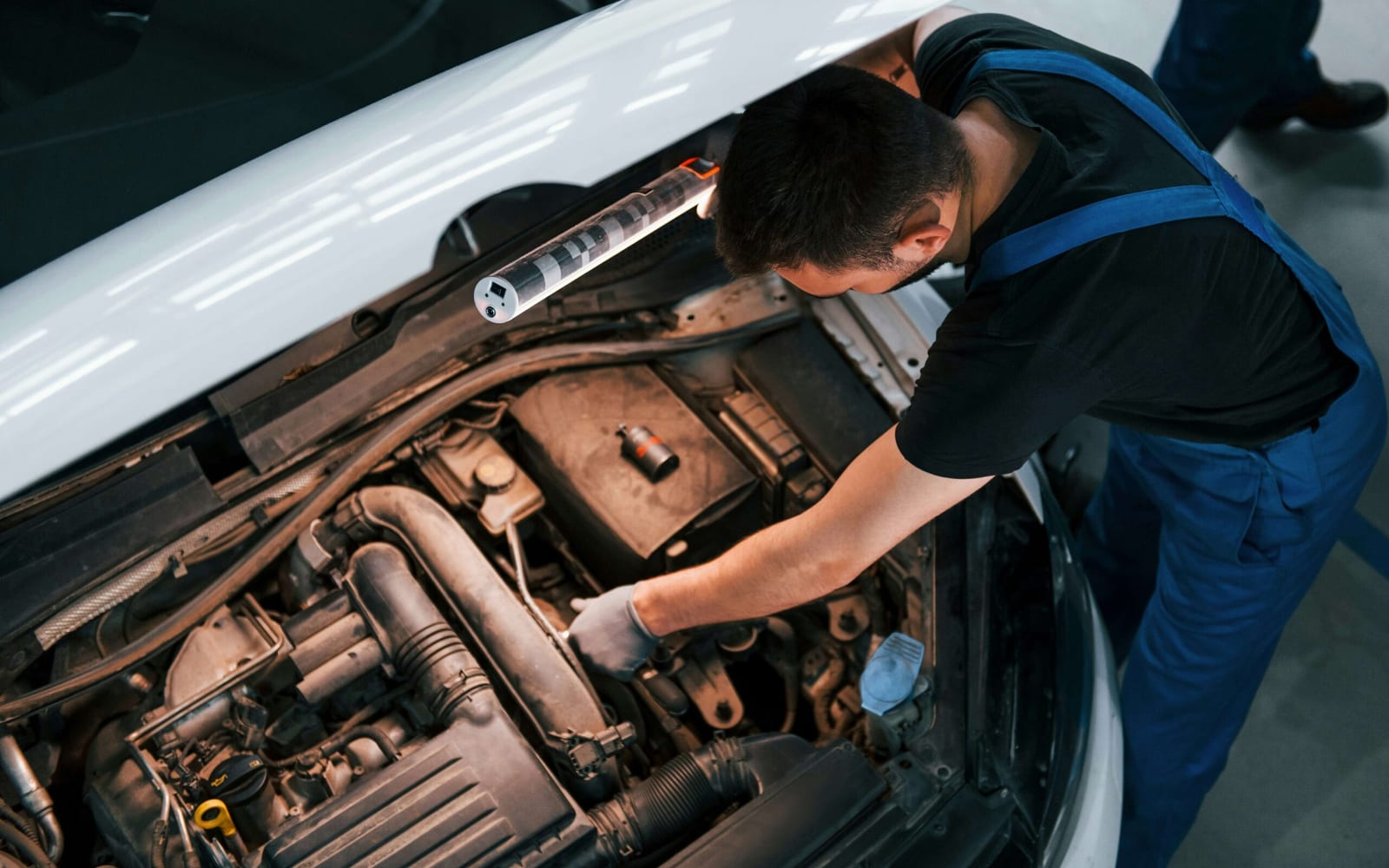
A small turbocharged engine can make as much power as a much larger engine without one. That sounds like a trick, but the idea behind it is straightforward: an engine's power is limited by how much air it can pull in, and a turbocharger finds a way to push more air in than the engine could breathe on its own. If you're newer to engines, start with what every driver should know under the hood.
Power comes from air and fuel
A gasoline engine makes power by burning a mix of air and fuel in each cylinder. The engine's computer can always add more fuel, but fuel needs oxygen to burn. In a naturally aspirated engine, the amount of air in each cylinder is limited by atmospheric pressure: the piston moves down, and outside air rushes in to fill the space.
If you could pack more air into the same cylinder, you could burn more fuel and get a bigger push on the piston every cycle. That is what forced induction does, and a turbocharger is one way to do it.
Using energy the engine throws away
A turbo has two halves joined by a shaft: a turbine on the exhaust side and a compressor on the intake side.
- Hot exhaust gas leaving the engine flows through the turbine and spins it, often at well over 100,000 rpm.
- The shaft spins the compressor on the other side, which pulls in fresh air and squeezes it.
- That pressurized air, called boost, is fed into the intake, so each cylinder gets a denser charge of air than it would on its own.
The clever part is where the energy comes from. Without a turbo, that hot, fast-moving exhaust would simply leave through the tailpipe. A turbo recovers some of that wasted energy and puts it back to work.
Why intercoolers matter
Compressing air heats it, and hot air is less dense than cool air, which cancels out part of the benefit. Hot intake air also makes the engine more prone to knock, an uncontrolled burn that can damage pistons. So most turbocharged engines run the compressed air through an intercooler, a radiator for intake air, before it reaches the engine. Cooler, denser air means more power and a wider safety margin.
Controlling boost
A turbo that kept spinning faster with no limit would eventually overpressure the engine. A wastegate prevents that by routing some exhaust around the turbine once boost reaches its target. On the intake side, a blow-off or bypass valve releases pressure when you lift off the throttle, so the compressed air doesn't slam back into the compressor.
Turbo lag and how engineers fight it
Because the turbo depends on exhaust flow, it needs a moment to spool up when you press the throttle from low rpm. That delay is turbo lag. Modern engines reduce it with smaller, quicker-spooling turbos, twin-scroll housings that use exhaust pulses more efficiently, variable-geometry turbines and, increasingly, electric assistance. That's why many modern turbo cars feel strong from very low rpm.
What a turbo asks of the engine
More power means more heat and more stress. Turbocharged engines are built with that in mind, but they're less forgiving of neglect:
- Oil changes on schedule. The turbo's shaft spins on a thin film of engine oil. Old or low oil is one of the most common causes of turbo failure.
- Warm up before hard driving. Cold, thick oil doesn't protect the bearings well.
- Let it cool after hard driving. A minute of gentle driving or idling before shutoff lets heat leave the turbo instead of cooking the oil inside it.
- Use the fuel the manufacturer specifies. Many turbo engines need higher-octane fuel to resist knock under boost.
Oil is only one of the fluids a turbo engine depends on. Coolant matters just as much, because turbos add a lot of heat. Here is how regular fluid checks improve vehicle reliability.
Understanding how a turbocharger works makes it easier to understand why modern engines are getting smaller while making more power, and why basic maintenance matters more than ever on the cars that use them.
About the author: Parker Ahlquist is a Canfield, Ohio lacrosse player and pre-med student who likes knowing how engines work.